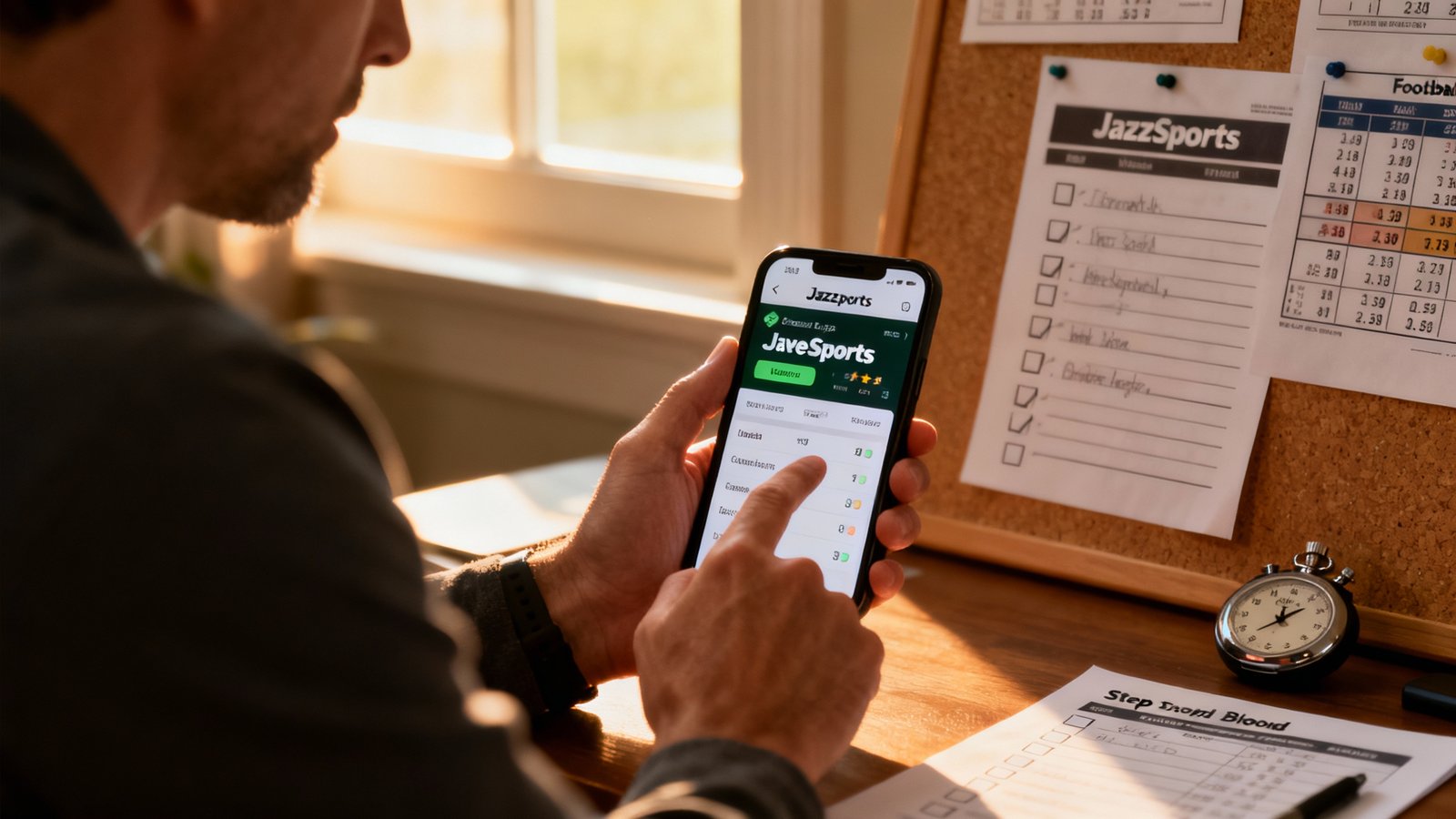
Live Betting Masterclass for JazzSports

Exploiting Second-Half NFL Inefficiencies

PROFESSIONAL SPORTS BETTING 2025

The Art of Precision

When the House is Slow

You don't beat live NFL markets by guessing. You beat them by recognizing when the house is slow, when the line still reflects a story that's already changed, and when the second half turns into a different sport. That's the heart of second-half betting. A little ruthless. Very precise. And, if you're on jazzsports.ag or another sharp on-line sportsbook, surprisingly repeatable.

The big edge is time. Not a lot—seconds. But when totals and spreads lag behind reality by even 15–30 seconds, as that UNLV study flagged in 2024, you get a window. Brief. Profitable if you've done your homework. The trick is filtering signal from noise while the broadcast, the crowd, and your group chat try to shake your focus.

"Second-half NFL live betting favors the watcher who understands why the last two drives looked different—not just that they did."

This masterclass is built for people who want to attack those windows systematically, especially in the USA where the market is massive, fractured by state rules, and gloriously competitive. We'll map the core inefficiencies, show how to translate halftime intel into wagers, and explain how to manage risk like a disciplined pro—even when the Chiefs are running tempo and your pulse is sprinting.

Let's cut the platitudes. You're here to hunt mispriced second-half lines. Good. Let's get surgical.

NFL live betting analysis

Why Second-Half Markets Break

Live Bets 101

Live markets live on speed and math. Both fail in predictable ways. Oddsmakers lean on pregame priors, model baselines, and data feeds that update faster than you do—except when they don't. Injury timing, drive context, and coaching adjustments twist the assumptions under those lines. The halftime number often lags behind what the last three series already told you.

And momentum—yeah, the word gets abused. But it's real when driven by structural changes: a backup corner isolated on an island, protection sliding the wrong way, a coordinator ditching early-down runs and flipping to RPOs. Those changes are readable by anyone watching closely, faster than a model can absorb them. That gap is your edge for live bets.

Known Lag Points You Can Exploit

  • Injury latency: A corner tweaks a hammy on the final first-half drive. The broadcast hints. The halftime line barely nudges. Hit second-half overs for the opposing WR1 targets or team total before the market catches up.
  • Special teams noise: A fluky return skews the halftime score. The model overreacts to total points. Fade the inflation if the underlying success rates say otherwise.
  • Wind and weather shifts: Microclimate changes aren't priced instantly. Stadium flags and next-drive pass rate tell you more than a generic pregame weather tag.
  • Tempo toggles: A coordinator accelerates pace on the last two first-half series. Books may shade totals, but not enough. Second-half overs can carry value, especially with timeouts in pocket.

Numbers That Matter More Than The Score

EPA per play split by personnel grouping. Pressure rate without blitz. Early-down success rate. These aren't buzzwords; they're the X-ray under the box score. If your notes say the offense is surviving only on third-and-long miracles, be careful chasing a second-half over just because the scoreboard looks spicy.

Second halves amplify all of this. Coaches narrow their play menus. Stars play heavier snaps. Clock management grows teeth. If a defense just logged 45 first-half snaps at altitude in Denver, second-half unders on opponent rushing attempts can turn into quiet gold.

The JazzSports Playbook

Halftime Edges Framework

Let's get practical. The JazzSports live betting framework isn't a magic formula. It's a checklist and a rhythm. You collect, you compare, you fire. The best on-line sportsbook operators will update quickly; good. You still have your window. Especially in the first 90 seconds after halftime lines post.

Step one: chart the hidden tells from the first half. Not highlights. Tells. Did the offense abandon duo for mid-zone after their LT got beat twice? Did the DC switch to match coverages on motion? Did the slot corner start trailing instead of passing off? These aren't trivia questions. They decide whether the second half becomes trench warfare or a track meet.

"Bet the number, not the broadcast. Bet the adjustment, not the narrative."

Step two: cross-check with live pricing on jazzsports.ag. If your notes say the Bills shifted to quick-game because the right tackle is losing, ask what that does to yards after catch and clock pace. Totals move, but often not to the true number fast enough. When the second-half total sits 2–3 points below your projection, you take it. Fast, clean, no drama.

Halftime Data Sprint

  1. Personnel log: record snaps for key defenders and any rotations that signal fatigue or benchings.
  2. Pace audit: compare first-quarter pace to late second-quarter pace; trend often continues.
  3. Protection diagnostics: chart pressures by side and by stunt; second-half chips and slides follow patterns.
  4. Timeout inventory: vital for over bets late; less so for unders if one team is happy to bleed clock.

Cowboys at Packers, Week 7, 2024

Halftime: Packers by 7. Public heat leaned Green Bay all week, and the number held some of that glow. But the last three first-half drives told a different story—Dallas shifted to more 11 personnel with compressed splits, pulling the Packers' safeties into conflict. A late hamstring flare for a Packers corner floated on the broadcast with no immediate line reaction.

Second-half spread opened Cowboys +7.5 on several books and tightened to +4.5 just before Q3. If you struck early, you had closing line value and the better read. Dallas won the second half by double digits.

You also need a kill switch. If the second half opens with an outlier play—strip-sack TD, busted coverage—pause. Re-calc. Don't double down just to "prove" the pre-kick read was right. Pride torches bankrolls.

Market Micro-Edges You'll See Twice A Week

  • Defensive back attrition: Second-half WR overs when the nickel is out and the safety is rotating shallow. Yardage doesn't lie.
  • Script fatigue: Offenses empty their clever stuff early. If the pre-snap motion edge disappears by Q3, fade scoring bursts.
  • Altitude and humidity: Late-September Miami or any December Denver game. Second-half missed tackles spike. Explosive runs happen. Totals tick up—but not always enough.
  • Kicking chaos: A mid-game wind shift makes 47-yarders dicey. Fourth-down aggressiveness rises. That nudges totals and second-half team points.

USA Market Realities

Live NFL betting in the USA isn't one monolithic market. It's a quilt. New Jersey and Pennsylvania run mature, high-volume ecosystems with aggressive live pricing. Illinois and Indiana are catching up fast. Nevada keeps its split personality—old-school retail and sharp mobile—while Colorado leans into data-forward online betting.

The big picture has been booming. The American Gaming Association clocked roughly $125 billion in total USA handle in 2024, and live betting accounted for close to 40% of those wagers. NFL share is gigantic: around 60% of season bets with live accounting for roughly 45% of that slice. Translation: second-half edges scale.

"Edges exist in every state, but they're different edges. Know the room you're betting in."

Mobile dominates the flow. North of three-quarters of live bets fire from phones, which fits the rush of second-half markets. It also increases your need for a disciplined workflow. Notifications off. Halftime checklist open. Limits clear. And yes, a responsible gaming plan in writing.

Case Files: Chiefs at Bills, Week 12, 2024

Halftime: Bills by 3. Kansas City's right tackle struggled, so the Chiefs pivoted to quicker concepts and chip help, which, paradoxically, juiced yards after catch. Then a Bills defender tweaked an ankle late in Q2. Second-half totals were slow to appreciate what Andy Reid would do with tempo and spacing.

Second-half over hit with room to spare—12 points over the live number in the end. That wasn't clairvoyance. It was matching adjustment to price while the market still stared at the halftime score.

All of this loops back to execution on a platform that can keep up. JazzSports' in-game menu is built for rapid entries and clean exits. The analytics under the hood keep improving—AI-driven updates are now common industrywide—but inefficiencies haven't vanished. They've just gotten smaller, which makes your timing and prep matter more.

Last bit. Don't chase boredom. If the halftime number matches your projection, pass. Real pros log the pass as a win because it preserves bullets for when the market trips over its own feet.